
Another Super Bowl is behind us, and now it’s time to discuss what really matters, how were the ads?
As usual, pundits and rating systems have weighed in on the best and worst, occasionally even agreeing. One theme, however, stands out: AI played a prominent role this year. Whether through ads for AI platforms, AI-enhanced product features, fully AI-generated spots, or AI-driven effects (like de-aging characters), the presence of AI was clear and much discussed.
Given that attention on AI, we thought it appropriate to run all Super Bowl ads through our AI-powered Creative Gauge ad evaluation solution. Creative Gauge is driven by Meadow, our AI trained on decades of MSW research identifying the types of advertising content associated with sales effectiveness. Meadow applies this vast array of human-generated knowledge at scale; identifying and scoring key content and recommending improvements almost instantaneously.
Using MSW’s proprietary Creative Effectiveness Score (CES) model, Meadow produces an overall CES Index along with indices across four components:
- Brand Messaging
- Emotional Connection
- Brand Linkage
- Advertising Structure
Overall Performance of Super Bowl Ads
Most video advertising continues to trend shorter. Fifteen-second ads now dominate many platforms (e.g., approximately 47% of YouTube ads are 15 seconds). Super Bowl advertising, by contrast, remains relatively long-form. This year, no ads were shorter than 30 seconds, and nearly 40% ran 60 seconds or longer.
Longer formats create space for storytelling, which can strengthen emotional engagement. The risk, however, is that the story overwhelms the brand.
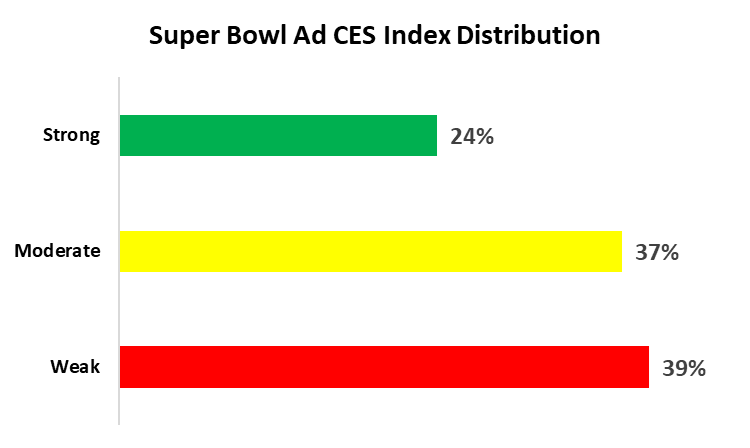
Meadow’s evaluation of this year’s Super Bowl ads reflects this tension. While nearly a quarter of this year’s ads would be considered strong overall, that figure is substantially lower than the percentage classified as weak (39%).
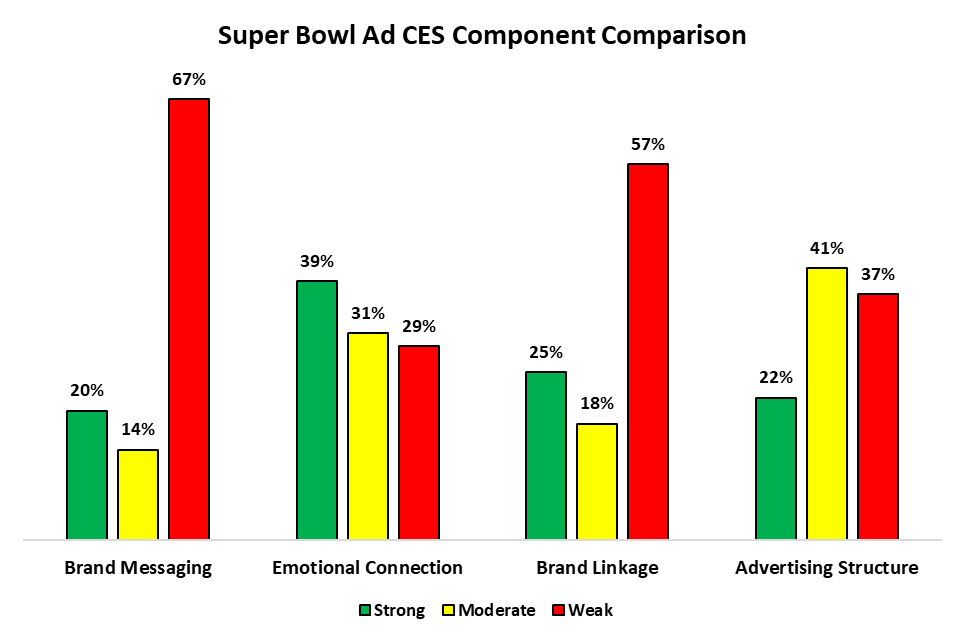
Drilling down to the component level, Super Bowl ads were strongest in Emotional Connection. Yet two-thirds were weak on Brand Messaging. In short: emotional engagement is high, but many brands could benefit from “getting into the game” sooner and more often.
How the USA Today Ad Meter Top 5 Fare
The USA Today Ad Meter remains the most widely recognized ranking system. Participants rate ads from 1 (lowest) to 5 (highest). This year, only the top five ads achieved an average of 3.5 or higher.
Ad Meter scores largely reflect ad liking, typically driven by humor, emotion, creativity, and celebrities. But how well do they align with sales effectiveness?
This year, moderately well. Of the Ad Meter’s top five ads, four indexed above 100 on overall CES effectiveness, and two qualified as strong in expected sales performance.
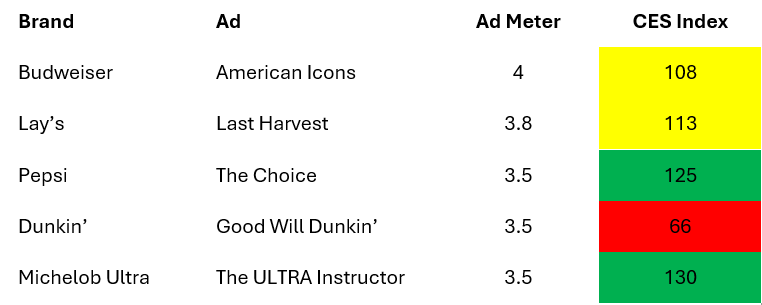
The outlier is Dunkin’. Though set in a 1995 Dunkin’ shop, the spot centers primarily on de-aged celebrity characters, drama, and humor. References to coffee and donuts are brief and generic, resulting in weak results across the board.
Which Ads Rank in the Top 10 for Creative Gauge Creative Effectiveness?
Each of the top 10 ads is strong overall, though none are strong across every component relative to their competitive category. The highest performers span a wide range of categories and creative approaches:
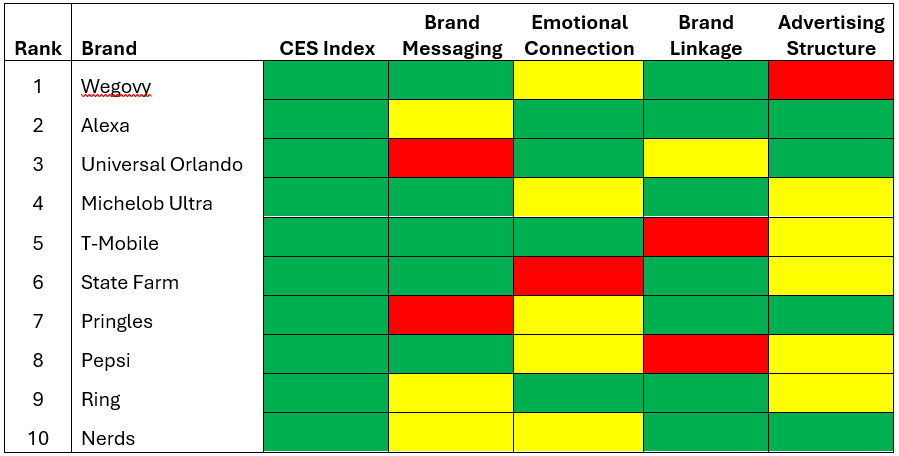
The takeaway: there are multiple paths to effectiveness but even strong ads leave room for improvement.
Consider the top-scoring ad for Wegovy. The Creative Gauge Dashboard highlights clear strengths and improvement opportunities.
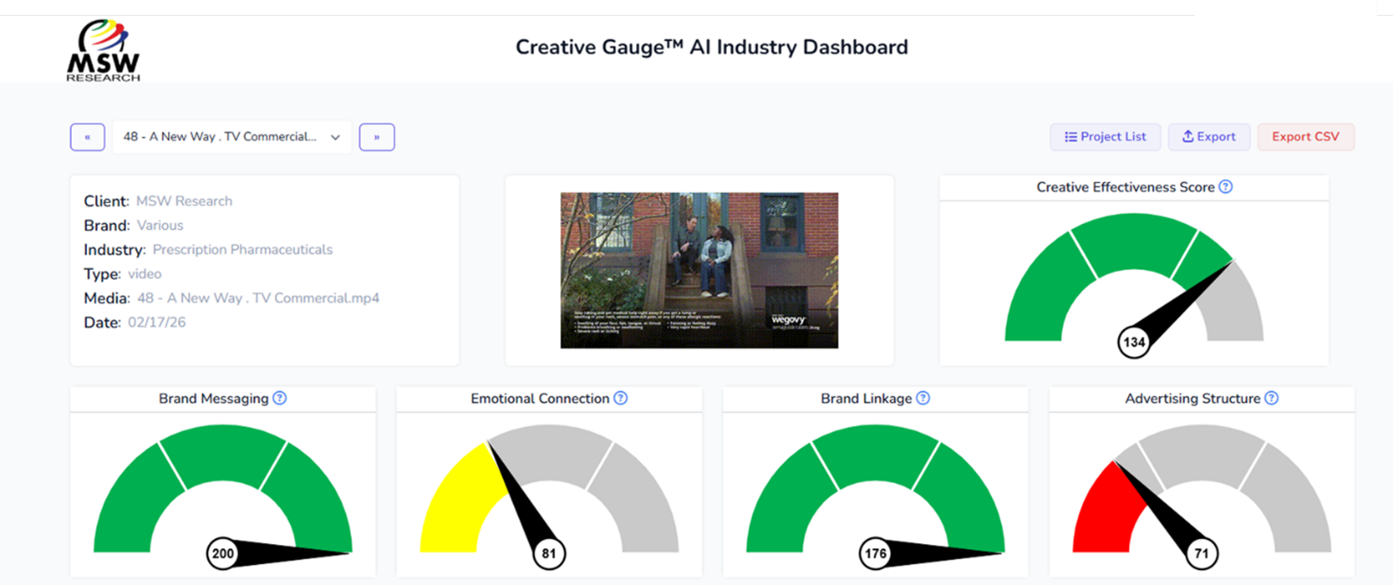
The primary strength lies in Brand Messaging. The ad communicates “news”; Wegovy now comes in a new, more convenient pill form and does so with clear differentiation, positioning itself as the first and only GLP-1 pill for weight loss.
Its key weakness is Advertising Structure. The ad lacks a meaningful demonstration, either literal or analogical. For example, showing before-and-after results or a compelling visual metaphor could have strengthened persuasion.
Even high-performing ads benefit from this type of diagnostic insight.
What About the Worst Ads?
The near-universal pick for worst ad was the Coinbase spot Everybody Coinbase. Creative Gauge agrees, assigning it a CES Index of just 18.
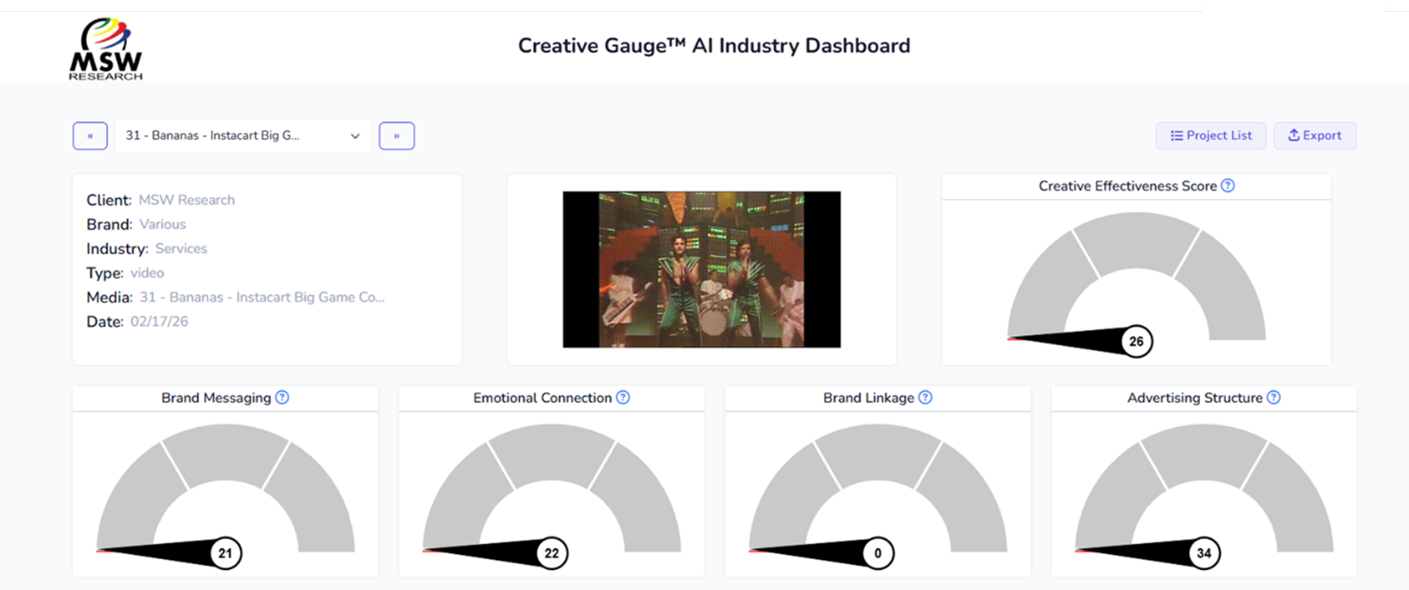
Second lowest? Instacart, which also received one of the few D grades from Northwestern University’s long-running Super Bowl Ad Review. It earned a CES Index of 26, scoring poorly across all components.
The core message, that users can choose their bananas on Instacart, is difficult to discern amid frenetic onstage antics featuring Ben Stiller and Benson Boone. The spectacle overwhelms the selling proposition.
And the AI Company Ads?
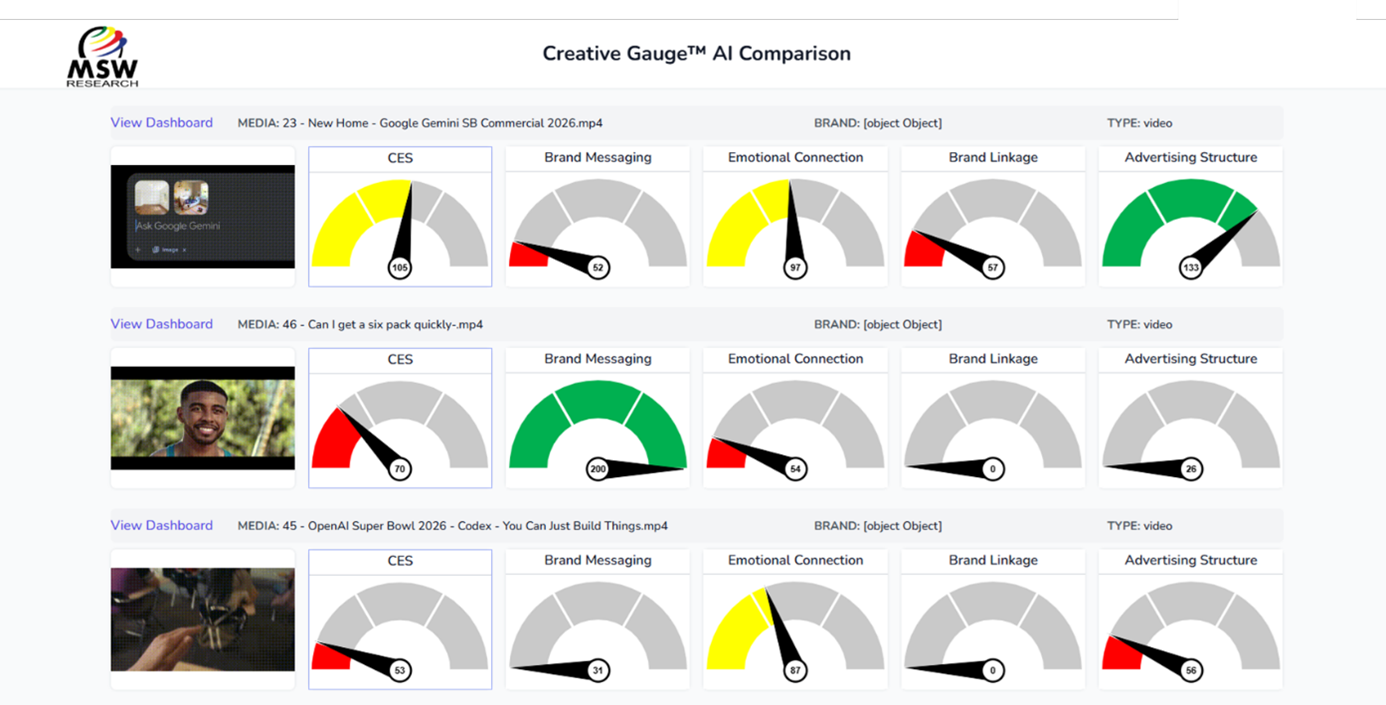
Returning to the AI theme, we asked Meadow to evaluate ads from three major AI players: Google’s Gemini, Anthropic’s Claude, and OpenAI’s Codex.
None “knocked it out of the park,” but Gemini emerged as the strongest of the three. Meadow responded positively to the clear product demonstration woven throughout the ad and the emotional resonance created through the mother-child interaction.
Claude effectively differentiated itself from competitors but lacked any strength in the other components. Codex took too long to introduce the brand, and the messaging ultimately felt generic.
The Super Bowl promotes spectacle. The marketplace rewards effectiveness.
As this year’s ads demonstrate, the two don’t always overlap. Liking, buzz, and celebrity can drive rankings, but sales effectiveness requires something more disciplined.
Creative Gauge was built to bring that discipline to creative evaluation: diagnosing what drives performance, what holds it back, and how to improve it before media dollars are committed. If you’d like more information on this study or to see how Creative Gauge works in practice, we’d be happy to continue the conversation.